Deadwooding
Removing the dead branches from an otherwise healthy tree, before wind brings them down on your roof, your car, or someone in the yard.
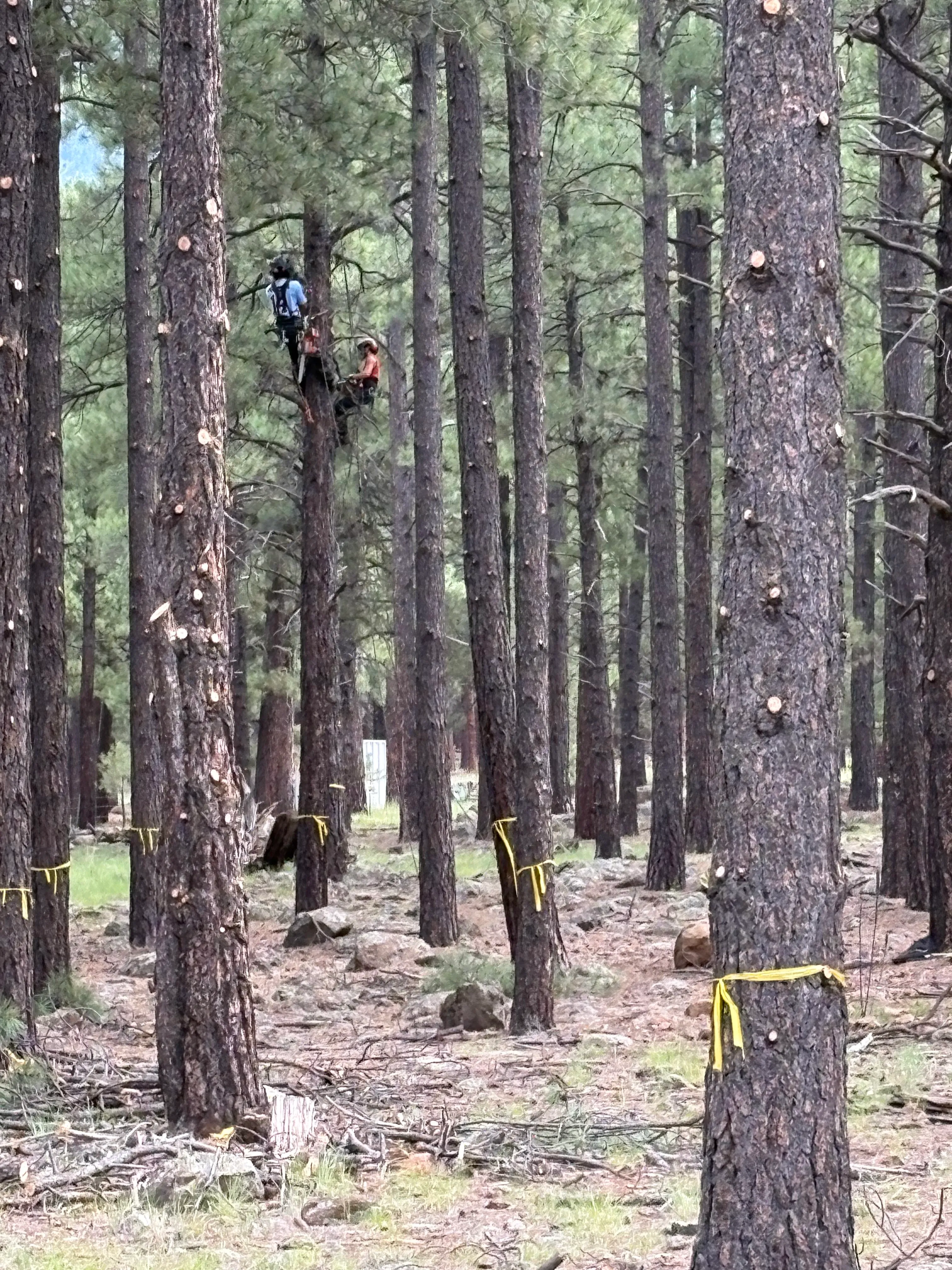
As trees grow, their lower branches often die off as the tree puts its energy into the branches higher up with better access to the sun. Ponderosa pines in particular produce a lot of deadwood. These dead branches, some as big as a small tree, can let go and do serious damage to structures, vehicles, and people. Deadwood is also a ladder fuel, helping a ground fire climb from the needles into the canopy and greatly increasing the severity of a fire. Some deadwooding can be done safely from the ground with a pole saw, but taller trees like the ones in this photo are too tall and have to be climbed. In some cases, the heavy limbs can be lowered in a controlled way to protect whatever is below. Whether it's one tree or eighty, we can handle it.
Common questions
Why does deadwood need to come out?
Deadwood is a natural part of growth for most trees, but dead branches are brittle and let go more easily in wind, rain, or snow, becoming a hazard to anything below. Deadwood also adds to the combustible fuel onsite. For both reasons, and sometimes simply for cleaner-looking trees, many customers prefer to remove deadwood proactively rather than let nature take its course.
Will deadwooding hurt the tree?
No. Done right, it only removes wood the tree has already given up on. Clean cuts at the branch collar let the tree seal the wound and put its energy into healthy growth.
How do I know if my tree needs it?
Look for bare, gray limbs with no leaves or needles while the rest of the tree is green. If you're not sure, we'll tell you straight during a free estimate.
How often should it be done?
It depends on the tree and the season. Older ponderosas often need a pass every few years. We'll suggest a timeline that fits your trees rather than a set schedule.
Have a tree dropping branches?
Free on-site estimates in Flagstaff, Sedona, Camp Verde, and everywhere in-between.