Trimming & Pruning
Shaping and thinning that keeps the natural form of the tree while opening up light, clearing views, and taking weight off heavy limbs.
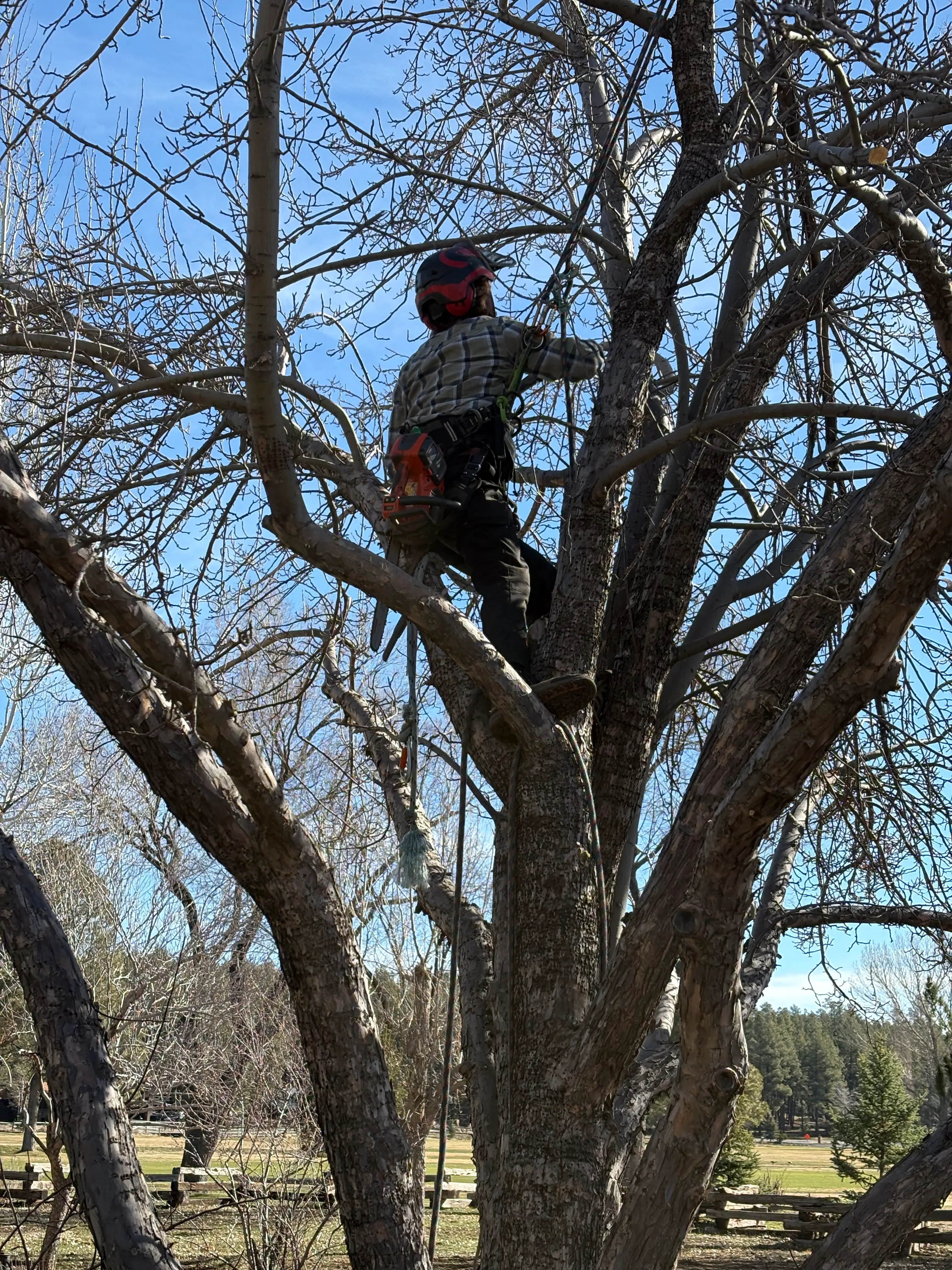
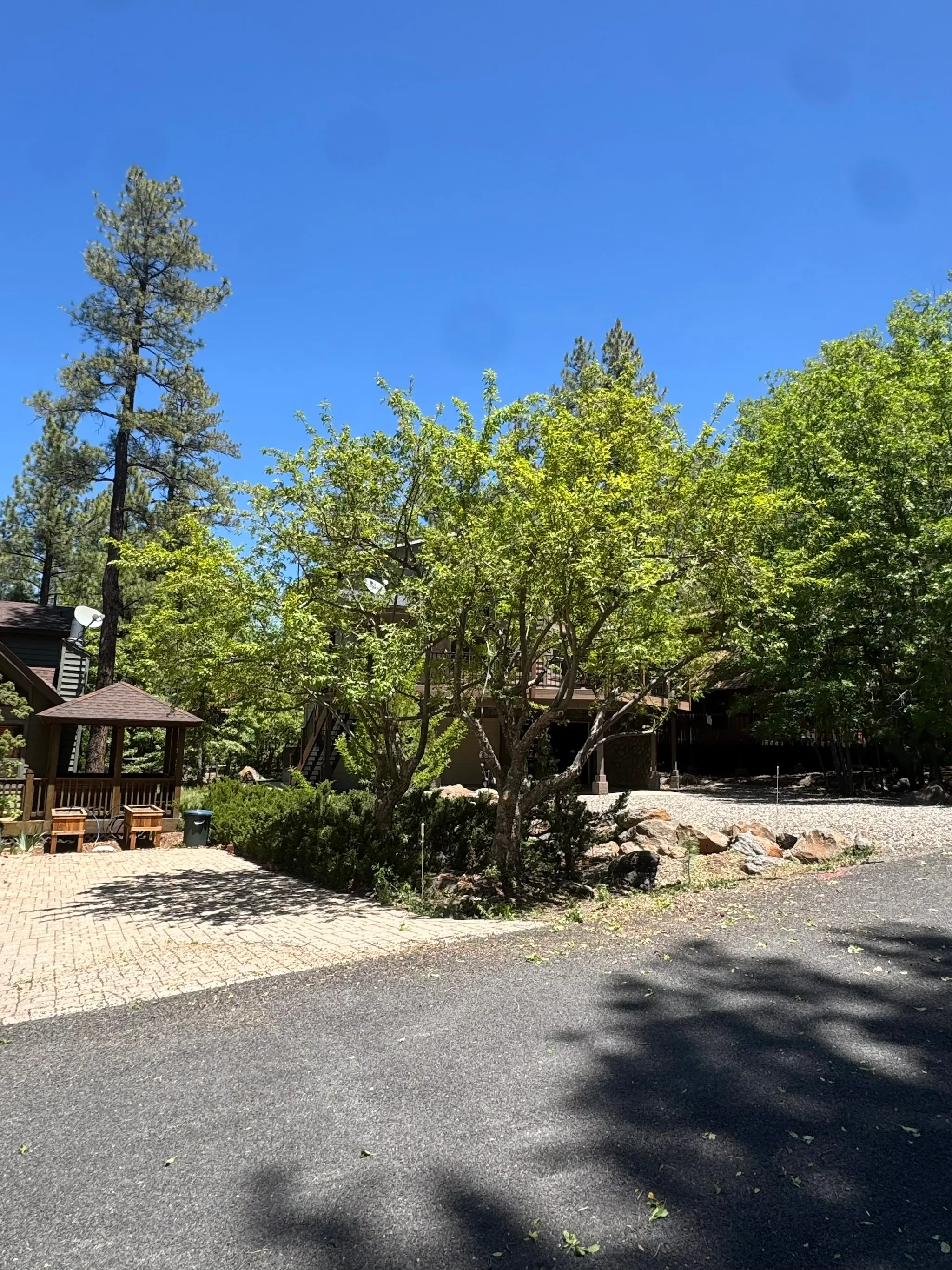
Trimming and pruning are similar work with different aims. Trimming is controlling the tree when it spreads into the house, crowds a chimney, or keeps dropping needles and limbs on the roof or driveway. Depending on the tree, that means working from the ground, off a roof, or climbing up to reach what can't be gotten to any other way. Trimming can also include thinning: reducing the density of branches to promote airflow and let light in, for the tree's health and to reduce wind risk.
Pruning is often used in the context of fruit trees: the selective cuts that balance fruit yield, fruit quality, and the shape of the canopy. Fruit and nut trees of various kinds are common in Northern Arizona, and we take the time to prune them with care so you get the best balance of all three.
Common questions
When is the best time to prune?
For most trees here, pruning from fall through early spring is safest, as the trees are dormant. We'll tell you if your job should wait a few months and why.
How much can you take off at once?
As a rule we keep removal to a modest share of the live canopy in one visit, so the tree isn't shocked. No more than about a quarter of the material is a rough guideline. Bigger changes are better done over a couple of seasons.
Will trimming and pruning improve my view?
Often, yes. Thinning and raising the canopy can open a view or let light into the yard while keeping the tree healthy. In other words, it improves the view of the tree and through the tree.
Are trimming and pruning important for safety?
Yes, if a tree has branches that are close to a chimney or are touching a roof that they could rub on. Pruning is not generally motivated by safety.
Can trimming clear my roofline or driveway?
Yes, that's one of the most common reasons for this work. Tell us what your clearance goal is and we'll help you reclaim that space.
Want your trees shaped up?
Free on-site estimates in Flagstaff, Sedona, Camp Verde, and everywhere in-between.